
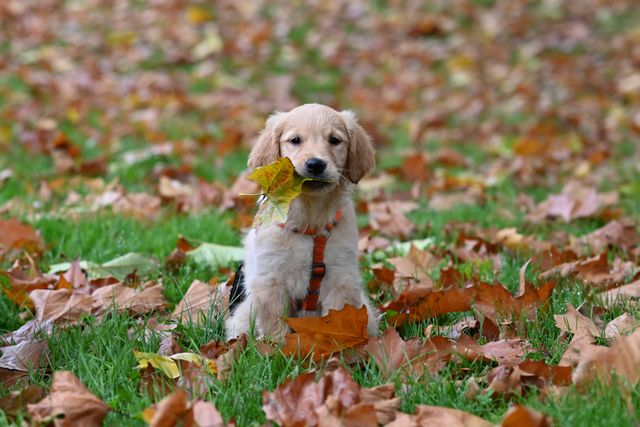
Early fall can be a bit tricky for our pets. The season mixes leftover summer hazards with brand-new autumn ones, so it’s good to stay alert. Here are some of the main things to keep in mind:
Temperature swings – Warm days followed by chilly nights can be tough on pets, especially seniors or those with health issues. Short-haired or small pets are more at risk of hypothermia if left outside too long as evenings cool.
Plants and fungi – After rain, mushrooms pop up everywhere—and many are toxic if nibbled. Acorns, chestnuts, and other fallen nuts can upset your pet’s stomach or even cause blockages. Even some seasonal plants, like chrysanthemums or autumn crocus, can be dangerous for dogs and cats.
Bugs and pests – Bees, wasps, and hornets get more aggressive in the fall, and curious pets may end up stung. Fleas and ticks are still active well into the season, especially in grassy or wooded areas. Plus, rodents start moving indoors, and any rodent poisons put out can be deadly to pets.
Seasonal foods and celebrations – Halloween candy is a big hazard—chocolate, sugar-free gummies and candies with xylitol, and even raisins can be toxic. Pumpkin spice treats for people often contain nutmeg, which isn’t safe for pets. And fall gatherings mean more food scraps and alcohol left out, both of which can tempt pets.
Outdoor play – Leaf piles look fun, but they can hide mold, sharp sticks, or parasites. Hunting season also means it’s extra important to keep dogs on leash to avoid accidents.
Changing health needs – Cooler, damp weather can make arthritis and joint pain flare up. And with shorter days, more walks happen at dusk or in the dark, which increases the risk of car accidents if pets aren’t easily seen.